Overview
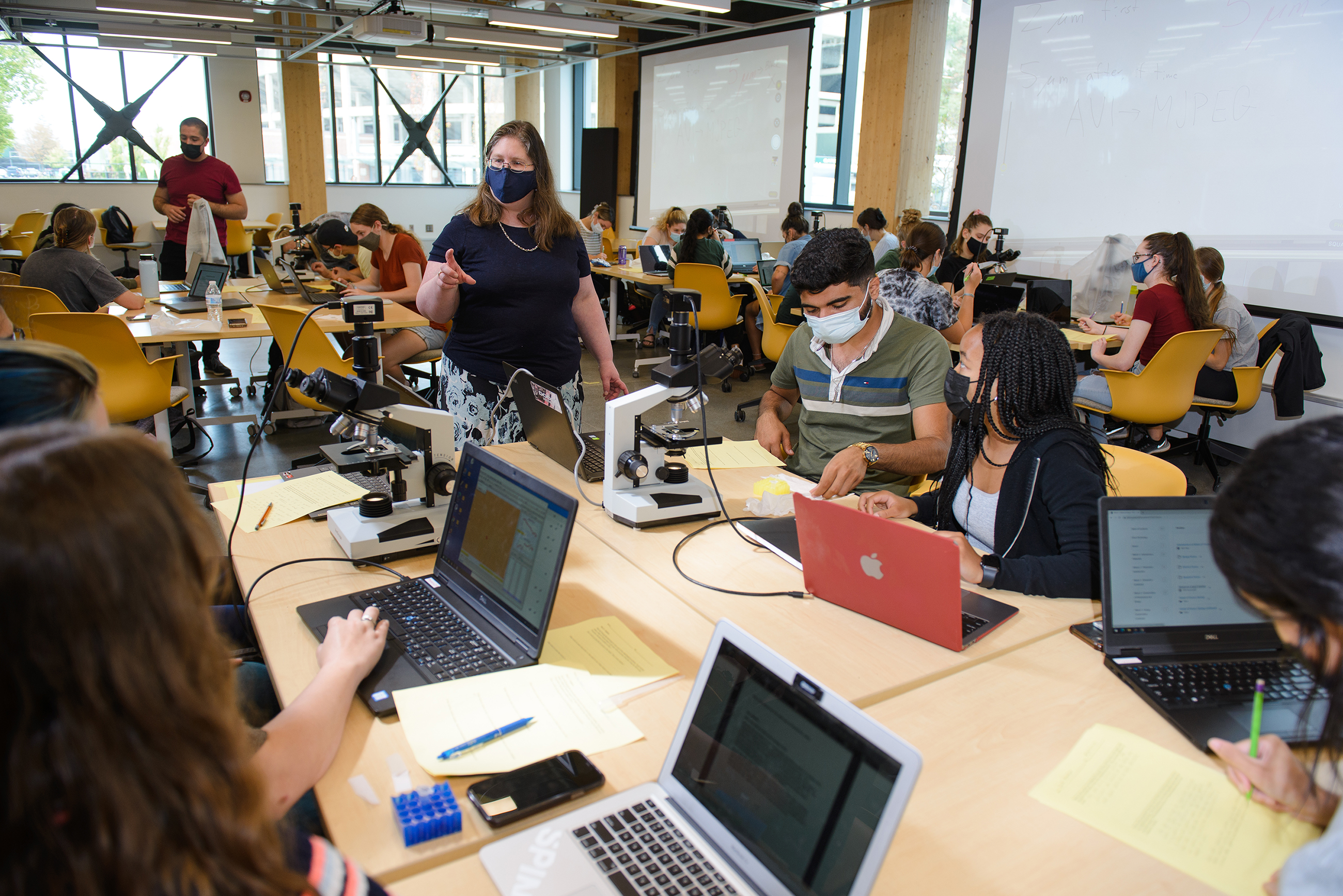
Studio Physics classroom at Michigan State University, showing collaborative active-learning with instructors and teaching assistants working directly with student groups.
At Michigan State University, I worked extensively with Studio Physics approaches, helping design and implement large-scale active-learning environments for introductory physics courses. This model replaces traditional lecture-based instruction with collaborative, inquiry-driven learning.
Key Features
Integrated learning
Combines lecture, lab, and recitation into a single environment where students actively engage with physics concepts.
Active learning
Students work in teams to solve problems, perform experiments, and build conceptual understanding.
Collaborative environment
Group-based work encourages peer instruction and deeper engagement with course material.
Data-driven instruction
Instruction is informed by educational research and continuous assessment.
My Contributions
I contributed to the development and implementation of Studio Physics at MSU, including curriculum design, instructor training, and assessment strategies. My work focused on improving accessibility, student engagement, and learning outcomes in large-enrollment courses.
Impact
Studio Physics has demonstrated significant improvements in student performance, retention, and conceptual understanding, particularly for students in STEM and life science disciplines.
Foundations & References
The Studio Physics model is grounded in research-based instructional approaches developed within the Physics Education Research (PER) community.
Studio Physics (RPI)
Original development of Studio Physics at Rensselaer Polytechnic Institute.
Wilson, J. M. (1994–1997). The CUPLE/Studio Physics Project →
SCALE-UP Model
Student-Centered Active Learning Environment with Upside-down Pedagogies.
Active Learning Evidence
Large-scale meta-analysis demonstrating improved learning outcomes in STEM.
Freeman et al. (2014). Active learning increases student performance →
Peer Instruction
Foundational work on interactive engagement and conceptual learning.